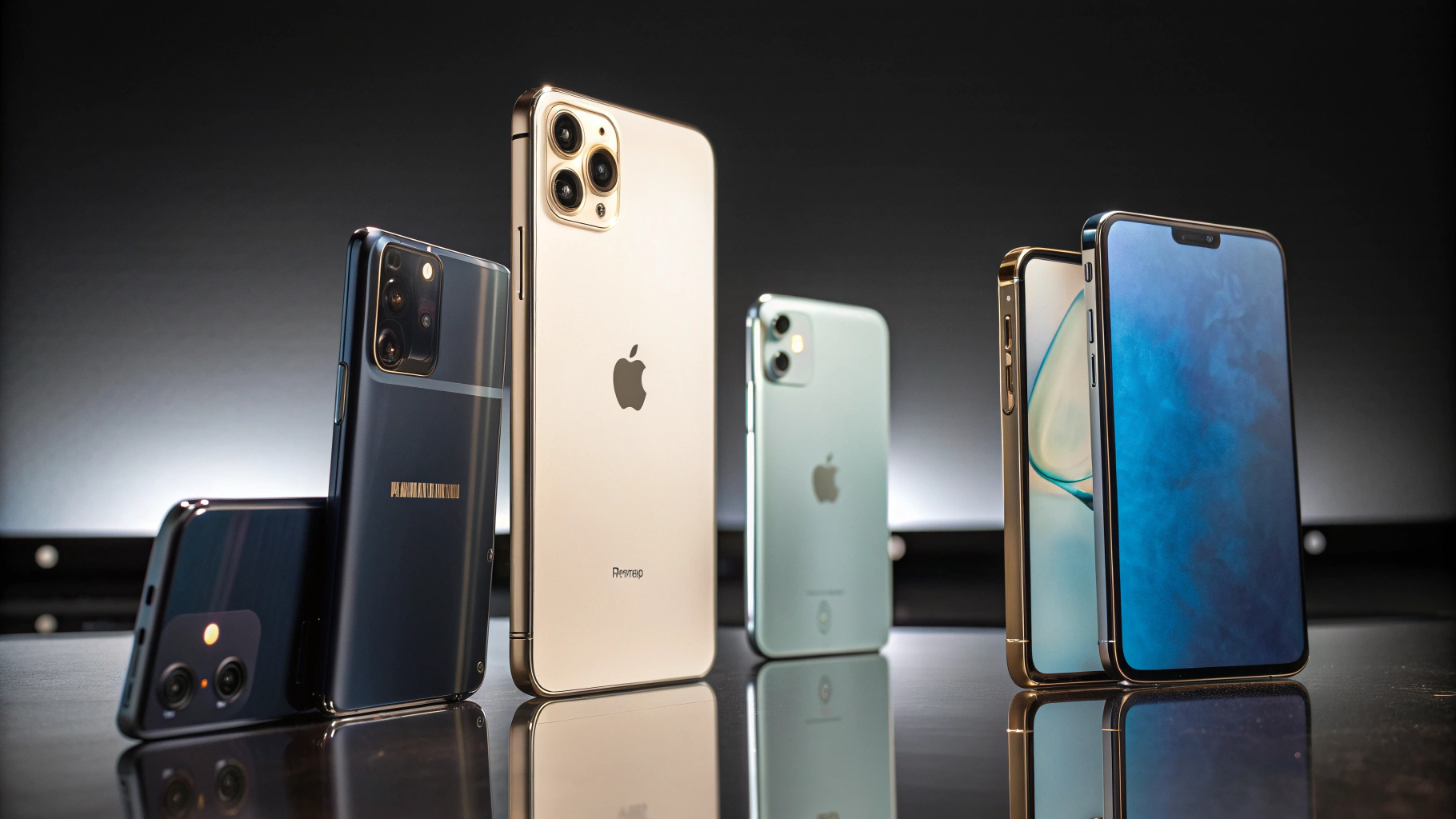
Fifth-generation wireless technology, commonly known as 5G, represents one of the most significant technological leaps in telecommunications history. With download speeds up to 100 times faster than 4G and latency reduced to milliseconds, 5G is not just an incremental upgrade but a fundamental transformation of how we connect, communicate, and interact with technology.
Understanding 5G Technology
At its core, 5G operates on three different spectrum bands: low-band, mid-band, and high-band millimeter wave. Each band offers different benefits and trade-offs in terms of speed, coverage, and penetration. Low-band 5G provides wide coverage similar to 4G but with modest speed improvements. Mid-band offers a balance between speed and coverage, while high-band millimeter wave delivers blazing-fast speeds but over shorter distances.
The technology employs advanced antenna systems called massive MIMO, which use multiple input and multiple output points to enhance signal strength and capacity. This allows 5G networks to support significantly more devices simultaneously without degradation in performance, a critical capability for the Internet of Things era.
Speed and Performance Benchmarks
The speed improvements with 5G are nothing short of remarkable. Real-world testing has shown download speeds ranging from 200 Mbps on low-band networks to over 2 Gbps on millimeter wave deployments. To put this in perspective, you could download a full HD movie in under 10 seconds on a robust 5G connection, compared to several minutes on 4G.
Perhaps even more important than raw speed is latency reduction. 5G networks achieve latency as low as 1-10 milliseconds, compared to 30-50 milliseconds on 4G. This near-instantaneous response time is crucial for applications requiring real-time feedback, such as autonomous vehicles, remote surgery, and cloud gaming.
Transforming Industries
The impact of 5G extends far beyond faster smartphone downloads. Healthcare providers are leveraging 5G's low latency to enable remote surgeries, where surgeons can perform complex procedures on patients thousands of miles away using robotic systems. The technology's reliability and speed make real-time medical interventions possible in ways that were previously unthinkable.
Manufacturing is experiencing a revolution through 5G-enabled smart factories. Wireless connectivity allows for flexible production lines that can be reconfigured quickly, while real-time monitoring of equipment prevents costly downtime. Predictive maintenance systems analyze data from thousands of sensors to identify potential failures before they occur, dramatically improving efficiency.
The automotive industry is perhaps the most visible beneficiary of 5G technology. Connected vehicles can communicate with each other and with infrastructure in real-time, sharing information about traffic conditions, hazards, and optimal routes. This vehicle-to-everything communication is foundational to the development of fully autonomous vehicles.
Consumer Applications and Devices
For everyday consumers, 5G is enabling entirely new categories of devices and experiences. Augmented reality glasses that overlay digital information onto the real world become practical with 5G's high bandwidth and low latency. Cloud gaming services can stream high-quality games without the need for expensive local hardware, democratizing access to premium gaming experiences.
Smart home ecosystems benefit from 5G's ability to handle numerous connected devices simultaneously. From security cameras to smart appliances, everything can operate more reliably with faster response times. The technology also enables more sophisticated home automation scenarios that would overwhelm 4G networks.
Network Infrastructure and Deployment
Deploying 5G networks requires significant infrastructure investment. Unlike 4G towers that can cover several miles, 5G millimeter wave technology requires many more small cells positioned closer together. Telecommunications companies are installing these small cells on lamp posts, buildings, and other urban infrastructure to create dense coverage networks.
The rollout strategy varies by region and carrier. Some operators are prioritizing urban areas where population density justifies the infrastructure investment, while others are taking a more measured approach that balances coverage with speed capabilities. This has created a patchwork of 5G availability that will take several years to fully mature.
Security and Privacy Considerations
With increased connectivity comes heightened security concerns. 5G networks incorporate enhanced encryption and authentication mechanisms to protect against cyber threats. However, the proliferation of connected devices creates a larger attack surface for malicious actors to exploit. Network operators and device manufacturers are implementing zero-trust security models and continuous monitoring to address these challenges.
Privacy advocates have raised concerns about the granular location tracking possible with 5G's dense network of small cells. While this precision enables valuable services, it also creates detailed records of user movements and behaviors. Balancing innovation with privacy protection remains an ongoing challenge for regulators and technology companies.
Environmental Impact and Energy Efficiency
Despite requiring more infrastructure, 5G networks are designed to be significantly more energy-efficient than their predecessors. The technology uses power more intelligently, scaling consumption based on network demand. This efficiency is crucial as data traffic continues to grow exponentially.
The environmental benefits extend beyond the networks themselves. 5G enables smart grid technologies that optimize energy distribution, reducing waste and improving renewable energy integration. Precision agriculture applications use 5G connectivity to minimize water and fertilizer usage while maximizing crop yields.
The Path Forward
As 5G networks mature and coverage expands, we're only beginning to see the technology's full potential. Researchers are already developing 6G technologies that promise even greater speeds and capabilities. However, realizing 5G's promise requires continued investment in infrastructure, development of compatible devices, and creation of compelling applications that leverage the technology's unique capabilities.
The next few years will be critical as industries adapt their operations to take advantage of 5G connectivity. Early adopters who successfully integrate 5G into their business models will gain significant competitive advantages. For consumers, the transition to 5G will happen gradually as networks expand and devices become more affordable, but the impact on daily life will be profound and lasting.